
-
Birth name
Roosevelt Ross Jr.
-
Place of Birth
Birmingham, Alabama, USA
-
TRIBAL AFFILIATION
Chickasaw/Sharakhi (Cherokee)
-
SURNAME HERITAGE
Origins Available: Scotland/England Scotland Ireland
Ross History, Family Crest & Coats of Arms
Etymology of Ross
What does the name Ross mean?
In the mountains of Scotland’s west coast and on the Hebrides islands, the ancestors of the Ross family were born. Their name comes from the given name Andrew, which is derived from Anrias, a progenitor of both the Ross Clan and the MacKenzies. Anrias was descended from the O’Beolans, an Irish Gaelic tribe of the sixth and seventh centuries who first brought Christianity to Scotland. The name may also be a nickname derived from the Old English word rouse, which means red or red-haired.
Ross Coat of Arms Creation
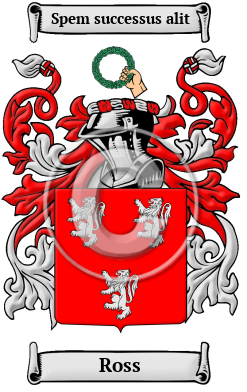
In the Ross shield there are three lions, to show that they are of Scottish descent. One branch also had a bend charged with buckles, to show that at one time there must have been an alliance with the Leslies.
The crest most commonly used by the Ross Clan is a hand holding a garland of laurel, and the motto, ” Spem successus alit ” (Success nourishes hope). 1
Early Origins of the Ross family
The surname Ross was first found in the old monastery of Applecross founded by St. Maelrubha where they were hereditary abbots who later created the Earls of Ross. Their territory was Faster Ross and the first documented Chief was Fearchar Mac ant-Saqairt (a Farquhar), the priest’s son, who helped King Alexander II against the old Celtic dynasty. Farquhar joined forces with the King to crush a rebellion in the province of Moray in 1215. Even though he was a direct descendent of the Irish King Niall of the Nine Hostages, he was granted a Norman knighthood by King Alexander and, a few years later, the Earldom of Ross (1234).
At this time, Tain, an early shrine created by St. Dutlac, was the capital of Ross. Now a ruin, it played an important role in Scotland’s religious history during the Middle Ages. In the late 15th and early 16th century King James IV made annual pilgrimages there. However, battered by its enemies, and many of its relics destroyed by changing religious influences, the capital was transferred to the town of Dingwall.
Ross Spelling Variations
Spelling variations are a very common occurrence in records of early Scottish names. They result from the repeated and inaccurate translations that many names went through in the course of various English occupations of Scotland. Ross has been spelled Ros, Roose, Ross, Ruse and others.